
Amber and the Language of Warmth
What perfumers actually mean when they say 'amber' — and why it is not the same as fossil amber or ambergris.
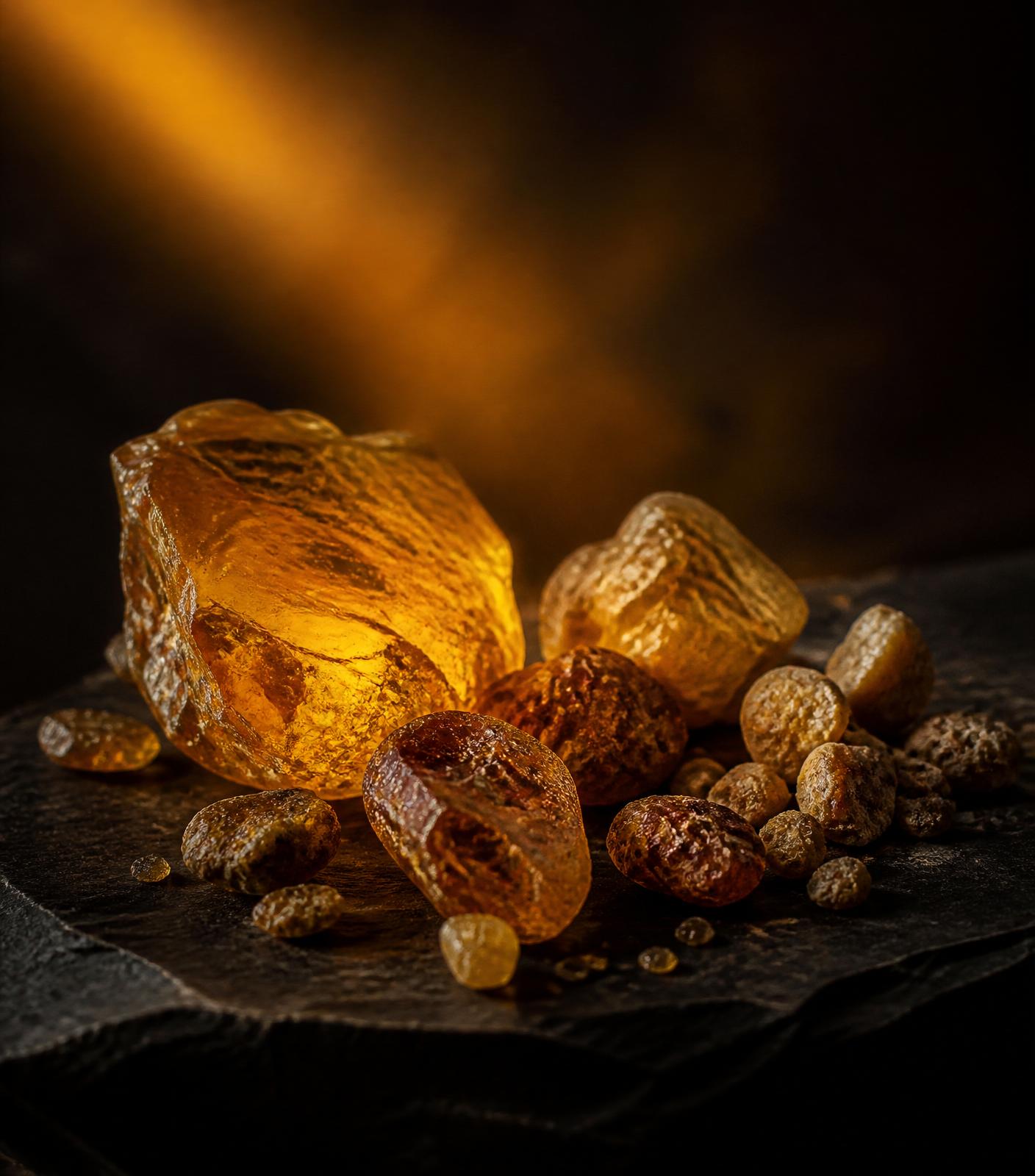
Amber is one of the most-used words in perfumery, and one of the most misunderstood. It is not a single flower, a single resin, or a fossil. It is a feeling — a mood — built on purpose.
Once you understand what perfumers mean by amber, most of the warm, resinous, honeyed compositions you already love start to make more sense.
“Amber is what a scent feels like after the sun has been on it.”
Amber is an accord, not an ingredient
In perfumery, an accord is a blend of several materials that together create a new, unified impression. Amber is the classic example.
A traditional amber accord usually draws on some combination of: labdanum (a dark, leathery resin from the cistus plant), benzoin (a sweet, balsamic resin from tropical trees), vanilla, tonka bean, and sometimes styrax, olibanum or opoponax. The exact recipe varies from perfumer to perfumer, which is why one house's amber can smell very different from another's.
What they share is the effect: warm, resinous, faintly sweet, golden-feeling. Amber is a warmth you can smell.
Amber is not fossil amber
The amber you find polished into jewellery is fossilised tree resin, millions of years old. It is mostly odourless. If you heat it, you can coax out a faint incense-like smell — this is where the association with warmth and resin comes from — but the material itself is not what perfumers use in a bottle.
When you see 'amber' in a fragrance's notes list, think mood and accord, not fossil.
Amber is not ambergris
Ambergris is something else entirely. It is a rare, waxy substance produced in the digestive system of sperm whales and, historically, found washed up on beaches. It has a marine, animalic, slightly sweet character and is one of the most prized fixatives in classical perfumery.
Because ambergris is regulated, ethically fraught, and vanishingly expensive, most modern fragrances use synthetic ambergris molecules — ambroxan and its relatives — to achieve a similar radiance. When you read 'ambery' or 'amber' in a modern fragrance note list, ambergris is almost never what is meant.
Why amber matters in Arabian-inspired perfumery
Arabian perfumery is fundamentally warm. Its palette — oud, rose, saffron, sandalwood, musk — is dense and expressive. Amber is the connective tissue that holds all of it together.
Under oud, amber smooths the sharp resinous edges and gives it a golden floor. Under rose, it turns the flower honeyed and jammy. Under musk, it keeps the composition from going cold or powdery. Amber rarely leads a composition; it is what makes the leading notes feel finished.
How amber behaves on skin
Amber notes tend to be base notes — they sit close to the body and develop slowly with warmth. That is why an amber-forward fragrance often smells different (and better) two hours in than at first spray.
On well-moisturised skin, amber becomes almost indistinguishable from warmth itself. It stops feeling like a scent you are wearing and starts feeling like a scent that seems to come from you.
When to reach for amber
Amber is a cool-weather friend. In autumn, winter, and cold evenings, it opens fully and reads glowing. In heavy heat, it can feel oppressive; a lighter application or a fresher composition tends to work better.
It also suits certain moments more than others: quiet dinners, layered clothing, low light, close conversation. Amber is not for the boardroom. It is for after.
A closer look at labdanum, benzoin and the resins
It is worth naming the materials that most often build an amber accord, because each one contributes a specific facet.
Labdanum is the dark, sticky resin of the cistus plant, gathered around the Mediterranean. It carries a leathery, faintly animalic warmth and is the backbone of most classical amber accords.
Benzoin is a balsamic resin from tropical Styrax trees, especially in Sumatra and Siam. It smells softly sweet, almost like warm vanilla with a whisper of cinnamon, and gives amber its rounded, comforting edge.
Vanilla and tonka bean lend a creamy, hay-like sweetness that ties the composition together. Styrax and olibanum (frankincense) can push the accord toward smokier, more sacred territory. Opoponax adds a honeyed, slightly medicinal depth used in the richer, more traditional ambers.
Understanding these building blocks makes amber less mysterious. When one perfumer's amber smells drier and more incense-like, they have leaned on labdanum and olibanum. When another's is honeyed and dessert-adjacent, they have leaned on benzoin, vanilla and tonka.
Amber in warm climates versus cold weather
The convention that amber 'belongs' in winter is broadly true but not absolute. In cold, dry air, a rich amber opens slowly and hangs beautifully close to the skin. In heavy summer humidity, that same amber can feel airless.
The Arabian world, which has always been fluent in warm, resinous perfumery, tends to wear amber differently in the heat: applied more sparingly, layered under a lighter attar, and often used at night when temperatures drop. It is less a rule about seasons and more a rule about volume — heat asks you to whisper the same notes you would speak aloud in winter.
Amber with oud, rose and musk
Amber's real gift is what it does to the notes it sits under. A few classic pairings to listen for:
Amber + oud: amber rounds the sharp, resinous edges of oud and gives it a golden floor. The result reads warm and regal rather than austere.
Amber + rose: amber warms rose into something honeyed and jammy. The pairing is one of the most enduring signatures in Arabian perfumery.
Amber + musk: amber gives musk a soft glow. Without amber, musk can read cold or powdery; with it, musk becomes intimate skin-warmth.
Amber + saffron: amber and saffron together create a slightly leathery, spiced warmth that reads unmistakably Middle Eastern.
Amber vs gourmand sweetness
It is easy to confuse amber with the gourmand family, especially when vanilla is dominant in the accord. The distinction is worth holding on to.
Gourmand fragrances borrow directly from food — caramel, chocolate, coffee, praline. Their sweetness is edible by design. Amber's sweetness is resinous. It comes from tree sap, balsam and warmth, not from sugar.
A good test: an amber accord smells like a warm room. A gourmand smells like a warm dessert. Both can be beautiful; they are simply doing different work.
Frequently Asked
- Is amber a natural ingredient?
- Not usually. Amber in perfumery is a composed accord, built from several natural and synthetic materials to create the impression of golden warmth.
- What is the difference between amber and ambergris?
- Amber is a composed warm-resin accord. Ambergris is a rare marine material with a very different, more saline-animalic profile. Modern fragrances almost always use synthetic ambroxan-family molecules in place of real ambergris.
- Is amber sweet?
- Slightly. Amber accords usually have a soft balsamic sweetness from vanilla, benzoin or tonka, but they are warm-sweet rather than sugary.
Be the first to know when the house opens.
A small circle. The occasional letter. No noise.