
Slow Beauty: On Taking Your Time
Beauty, in this house, is a ritual — not a rush. What slow beauty actually looks like on a Tuesday night.
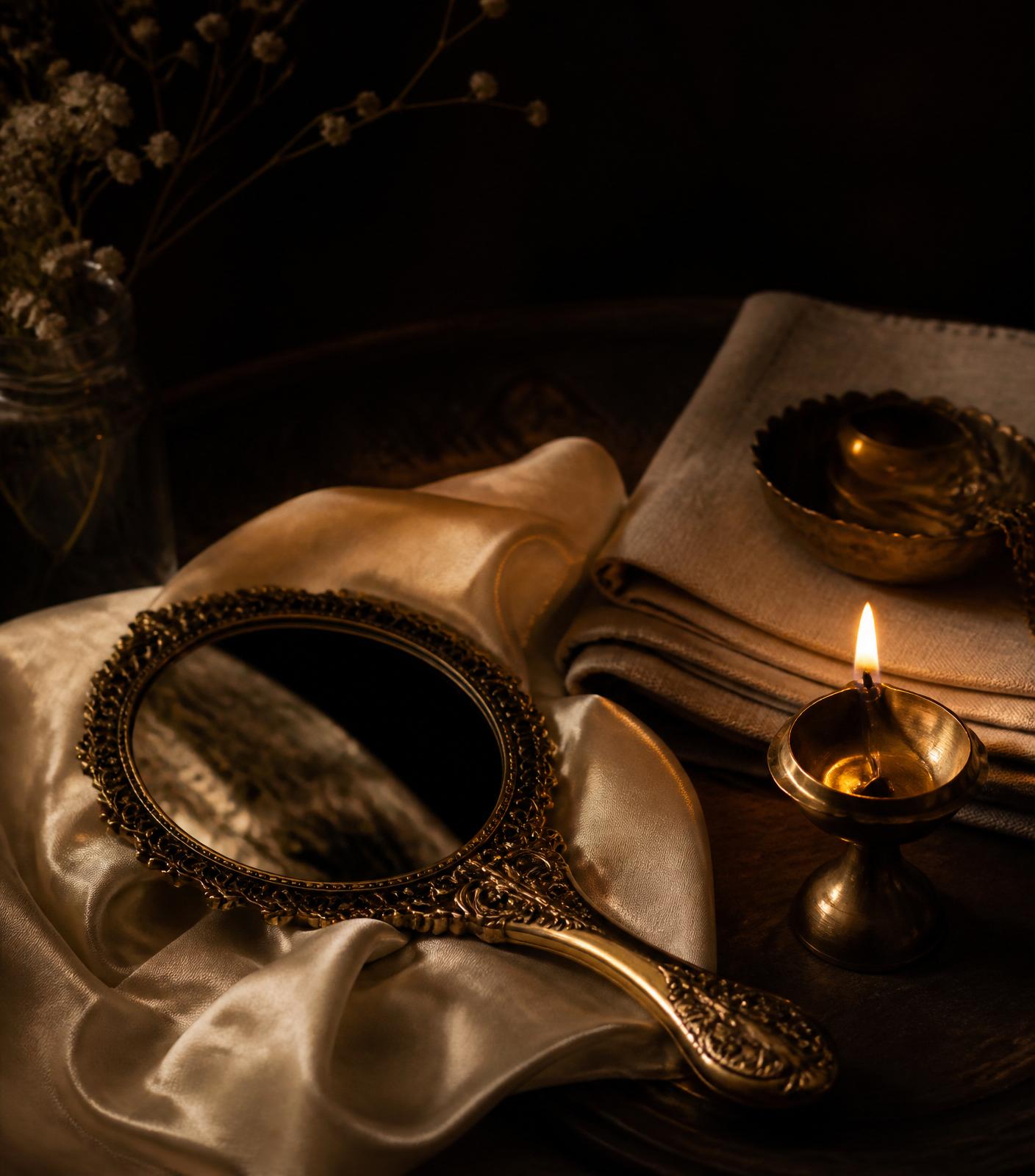
Slow beauty is less a method than a mood. It is the quiet decision to treat a few minutes of your own attention as a small ceremony rather than a task, and to let the ritual matter as much as the result.
It is what happens when you warm the oil between your palms before you apply it. When you take a breath before you dress. When you let the scent settle before you leave the room.
“The oil is not the ritual. The pause is.”
Why the pause is the point
The most luxurious part of a beauty ritual is rarely the product. It is the pause the product asks of you — the moment you stop, notice the warmth of your own skin, and pay attention.
Modern life is very good at rewarding speed. A ritual is a small, private refusal of that pattern. Not a dramatic one. Just a few minutes where the phone is elsewhere and something you are doing is only for you.
Scent and memory
Fragrance is one of the most powerful memory anchors we have. The neural pathways that process smell are unusually close to the areas involved in emotion and long-term memory, which is why a single note — a childhood soap, a grandmother's perfume — can pull you back years in a second.
Choose a scent you use only in your ritual, wear it consistently, and something quietly beautiful happens over time: the fragrance and the ritual begin to summon each other. Applying the oil starts to feel like coming home.
Evening ritual
Evenings are for winding down. The goal is not to add steps; it is to lower the tempo of the ones you already do.
After a warm shower, while your skin is still slightly damp, warm a few drops of a perfumed body oil between your palms until you can smell it in the air. Smooth it across your shoulders and collarbone first — the areas that carry tension — then over your arms and legs. Do not rush.
Sit for a minute before you dress. Breathe once, slowly. That minute is the ritual. Everything else is preparation for it.
Morning ritual
Morning rituals are shorter by design. Their job is to set an intention, not to relax you.
A small application of oil at the pulse points — inside the wrists, behind the ears, at the base of the throat — is often enough. Layer a light fragrance above it if you like projection. Then step into the day already carrying something small that belongs only to you.
Make it sustainable
The most beautiful routine in the world is the one you actually keep. If your ritual takes twenty minutes, you will do it twice a month. If it takes three, you will do it most days — and that is the version that changes anything.
Slow beauty is not about complexity. It is about intention. A short, honest ritual you return to is worth more than an elaborate one you resent.
A structured evening routine
If you want a template, here is one that fits inside ten minutes and rewards the small effort.
One: warm shower or a quick face-and-hand rinse. Not a decontamination — a signal to the nervous system that the workday is done.
Two: while the skin is still slightly damp, warm three or four drops of a perfumed body oil between the palms until you can smell it in the air. Smooth it across the shoulders, décolletage, forearms, and behind the knees.
Three: press one small trace of a perfume oil or attar into each wrist and at the base of the throat. Do not rub.
Four: sit for sixty seconds. Breathe in through the nose, out through the mouth. Notice the scent lifting from the skin. That minute is the entire point of the ritual.
A shorter morning version
Mornings do not need the same length; they need the same attention. Two drops of oil warmed between the fingertips, pressed into the wrists and behind the ears, is enough to carry an intention through the day.
If you like more projection, add a single mist of an alcohol-based fragrance above the collarbone after the oil has settled — never before, or the oil traps it flat against the skin.
Scent as a personal marker in time
Over months, a consistent ritual scent stops being 'a perfume you own' and becomes something closer to a signature — a marker other people associate with you, and one you associate with a particular period of your own life.
Years later, opening the same bottle will return you to the room where you first wore it. That is not sentiment. It is how memory and scent are wired.
Keeping the ritual realistic
Give yourself permission to shrink the ritual on the days that require it. Two drops of oil at the wrists and a breath is still a ritual. The point is not the length; it is the return.
The nights you skip it entirely are also part of the practice. A routine that survives being missed is a routine that lasts.
Frequently Asked
- Is 'slow beauty' just a marketing phrase?
- It can be, but at heart it is a real practice: fewer, better steps, done with attention. Treat it as a mindset first and a product category second.
- How long should a nightly ritual take?
- Three to ten minutes is realistic for most people. Long enough to feel intentional, short enough to actually happen.
Be the first to know when the house opens.
A small circle. The occasional letter. No noise.